Featured
Stop Running Blindly: What Residents Actually Want From Estate Management
Praise Ohans
2026/06/23
Understanding Modern Resident Expectations in Property Management
The relationship between residents and property management companies has changed in ways that many estate managers are still catching up to. Residents today, whether in apartments, condos, or gated communities, expect more than simply having their problems solved. They expect transparency, responsiveness, and the sense that someone actually cares about their living experience. The issue, however, is that most estate management operations are archaic and cannot live up to the modern resident’s expectations.
Recent research shows that resident satisfaction directly correlates with tenant retention rates and property value appreciation. When residents feel heard and respected, they stay longer, refer friends, and don't become the nightmare tenant you'll spend years trying to evict. Let's explore what's actually driving modern resident expectations, and why ignoring these signals is costing properties millions.
1. Transparent Communication and Accessibility
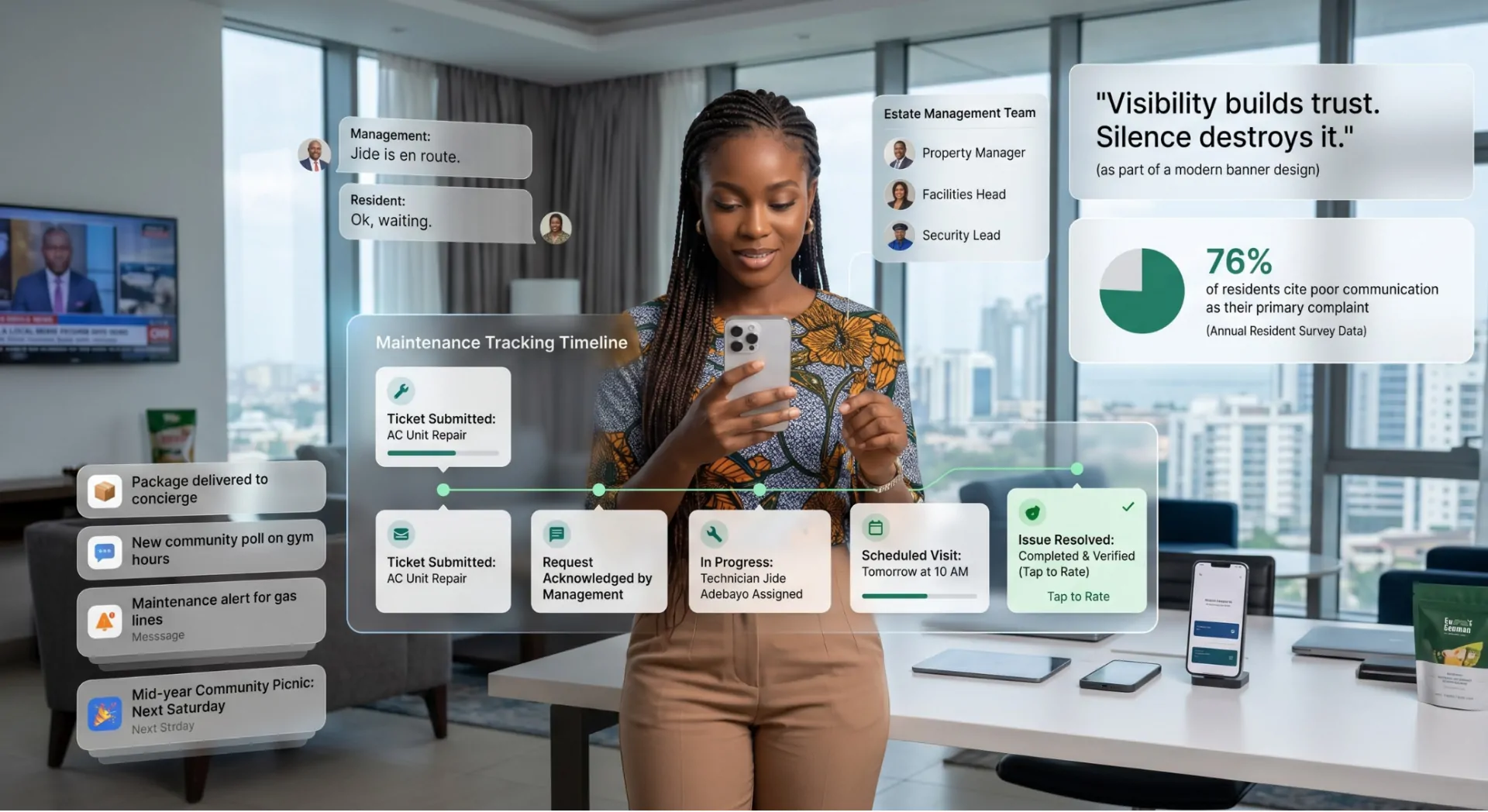
Transparency in communication cannot be emphasized. Silence after residents log a complaint breeds animosity between them and the management. For example, it can get deeply frustrating when they submit a maintenance request and hear nothing for three days. This erodes trust in a way that's hard to rebuild.
Residents expect instant communication channels with their property management, not the old-school model of leaving a message and hoping someone calls back. The expectation has shifted because technology made it possible. Now, they expect real-time messaging platforms, clear escalation procedures for urgent issues, monthly updates on community matters, and visible management presence.
According to the Community Associations Institute (CAI), 76% of residents cite poor communication as their primary complaint. When you think about this number, you’ll realize it’s not just about maintenance failures or amenity quality but about feeling invisible. This is why many management companies are optimizing their estate management using resident portal software that provides 24/7 access to maintenance tickets, community documents, and announcements. Residents can track their requests, see timelines, and understand what's happening without blowing up anyone’s phone.
2. Proactive Maintenance
There's a huge difference between a roof that's maintained and one that’s fixed. This plays a psychological role in residents’ minds.
When a property manager calls a resident to say, "We're inspecting the HVAC next Tuesday during your regular maintenance window," that resident automatically feels cared for. On the other hand, if inspection and repair are only done when things break, a resident feels betrayed by poor planning.
Data from the Property Management Association indicates that properties with proactive maintenance budgets experience 30% fewer emergency repairs and significantly higher resident satisfaction scores. More importantly, those properties also have better financial outcomes. Prevention is always cheaper than crisis management, yet many estate managers still operate as if they discovered this concept yesterday.
3. Financial Transparency and Clear Budgeting
Money conversations make everyone uncomfortable, which is probably why so many estate managers avoid them entirely. However, most residents don’t demand much to begin with; they only want to understand where their money is going.
Estate management transparency regarding finances is fundamental to gaining residents’ trust. Residents expect detailed budget breakdowns, regular financial reports delivered at least quarterly, and justification for fee increases with comparative market analysis showing why it's necessary.
A 2023 survey by Zillow research found that residents who receive monthly financial statements report 45% higher trust in their management than those receiving annual reports. This isn't complicated; it boils down to consistency and clarity. When a resident understands that their fees went up because the local HVAC service rates increased across the market, backed by actual quotes from three vendors, they don't just accept it; they respect the professionalism behind it.
4. Community Amenities That Matter
The era of checking boxes is over. A community with a gym that nobody uses and a pool that's closed half the year isn't impressing anyone.
Residents want community management services tailored to what they really need, with increasingly sustainable and eco-friendly options that align with their values. This means well-maintained facilities, not just present ones.
According to NAHB data, 68% of millennial and Gen Z residents consider sustainability features when choosing where to live, and they expect management to maintain these features properly. A solar panel installation that breaks down and remains unfixed for months sends the message that sustainability is performative, not genuine.
5. Professional, Trained Management Staff
Residents can easily tell the difference between a professional and someone just collecting a paycheck. They notice when staff don't know the answer to basic estate queries, when contractors seem poorly supervised, and when the same problem keeps happening because nobody actually fixed the root cause. This often leads to disrespect from residents, which is why it is imperative to know how to train estate staff.
Residents value licensed property managers with relevant certifications, trained maintenance teams who know what they're doing, and management companies that engage regularly with the community. The International Code Council and CAI emphasize that properly credentialed management teams reduce disputes and improve compliance.
6. Privacy and Data Security
With digital solutions comes responsibility. Residents hand over sensitive information like banking details, personal documents, and contact information for emergency purposes. They expect this information to be protected and kept discreet.
Residents demand data privacy in property management standards, including GDPR and CCPA-compliant resident portals, secure document storage, clear privacy policies that explain what's happening with their data, and protection against unauthorized access.
A Cybersecurity and Infrastructure Security Agency (CISA) report emphasized that property management companies handle sensitive data and must implement enterprise-grade security. This is a reasonable precaution in a world where data breaches happen constantly.
It's About Partnership
Operating a resident-centric estate has little to do with how palatial your estate looks. It is directly tied to how well you actively listen to resident feedback, use data to make informed decisions, invest in technology and staff training, communicate proactively and transparently, and continuously improve based on what residents actually tell you.
Residents now view management as partners invested in their quality of life. The conversation no longer centers on whether residents will demand better estate management because they already are. The question is: will the management actually listen?
Tags
Tips and Guides
Updates


SYLOGATE
An Estate Management Software Company.
Simplify complexity and manage multiple residents and visitors from a single platform.