Most estate problems do not become serious because of the original issue. They usually become serious because of how the issue was handled after a resident complained. One study found that over 80% of property managers believe they communicate well with residents, but fewer than 40% of residents agree. This is a complete disconnect between how management thinks communication feels and how residents actually experience it. The problem is that once residents stop trusting communication, estate management becomes harder.
A resident can tolerate waiting for repairs if they believe management is taking the issue seriously. What people struggle with is uncertainty: no form of update or acknowledgement after reporting something important. In many Nigerian estates, this problem gets amplified by informal communication systems. What estate managers get wrong usually comes down to a few specific mistakes perfectly highlighted in this article.
Treating Complaints Like Interruptions
Most estate management crises do not begin as major problems. They often begin as minor complaints that were acknowledged casually or completely overlooked. For instance, a resident reports a broken perimeter light, and the estate manager says, "noted, we'll sort it," and moves on without any proper follow-up. Weeks later, the light is still broken, and the resident is telling their neighbour that management doesn't care.
Repeated complaints are usually not signs of problematic residents. They are signs of broken systems in estate operations. If multiple residents keep reporting plumbing failures, parking disputes, or access control issues, the problem is most likely structural. Well-managed estates build systems where complaints are logged, assigned, monitored, updated, and resolved visibly.
No Clear Complaint Channel
If a resident doesn't know the right way to raise an issue, they'll use whatever is most convenient. For most estates without a dedicated estate management platform, they rely on WhatsApp, where residents use voice notes or text messages to communicate with estate managers.
Some complaints receive fast responses because the resident knows someone personally. Others get ignored because they were lost inside a ton of other WhatsApp messages. The thing about using WhatsApp as a complaint channel is that there is no clear visibility on the resident side. This makes tracking an uphill task.
Good complaint management starts with a written process: how complaints are submitted, who receives them, and what the expected response time is. Something clear enough that residents know what to do, and management knows what to expect.
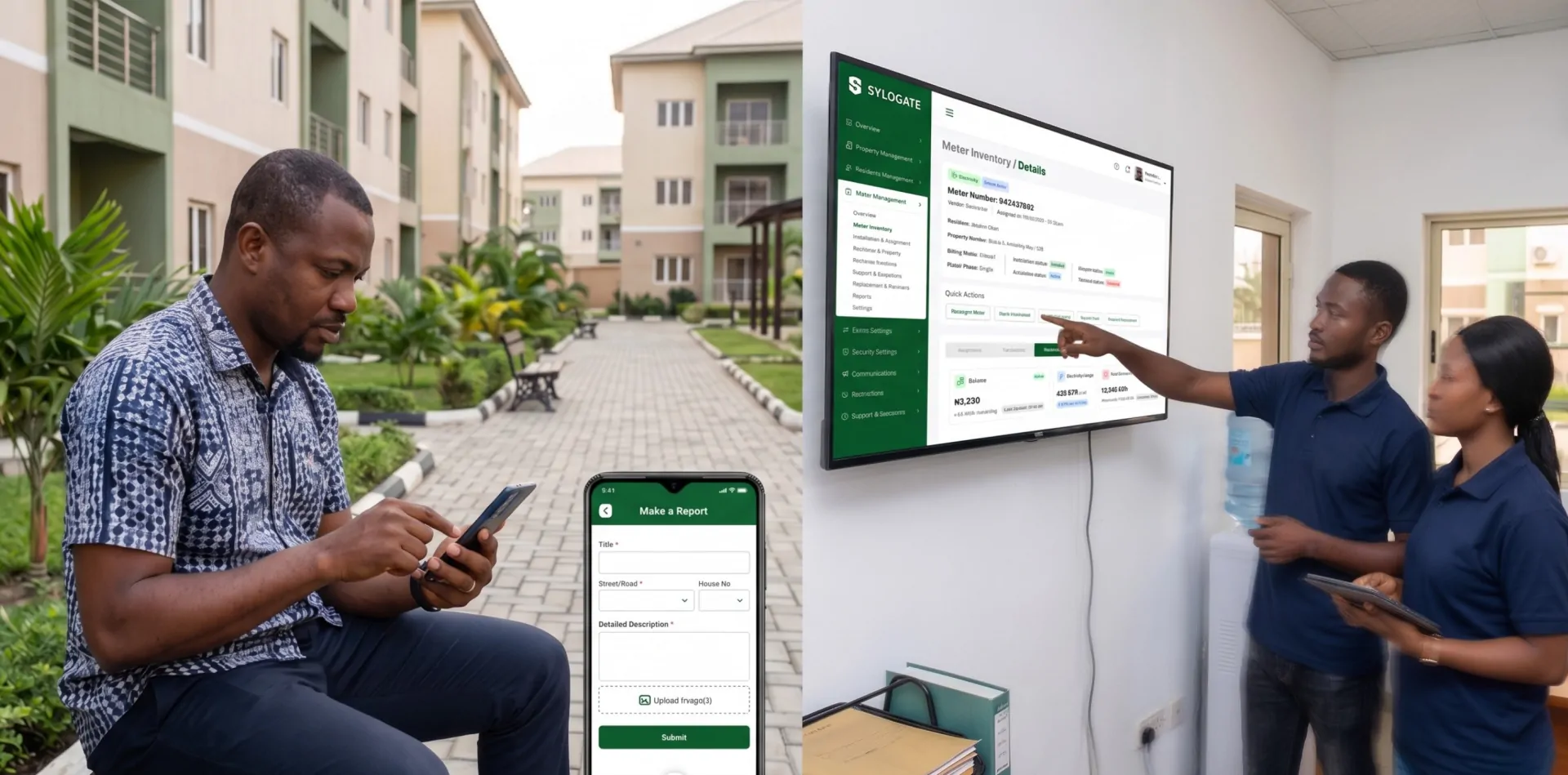
Smart estate management platforms like Sylogate allow residents to log complaints directly within the app with the option to attach photos for more detail. The complaint is immediately recorded, management is notified, and the maintenance log can be tracked from start to finish.
Getting Defensive
When a resident raises a complaint, they're usually not attacking anyone. They're frustrated about something specific and want it fixed. When the estate manager's response is to explain why the complaint isn't valid or point out what the resident did wrong, a manageable situation can easily turn into a full-blown conflict.
Resident complaints are almost never personal. They're usually about a real problem, and estate admins must be ever willing to acknowledge and communicate clearly what happens next. This is not the time to try to win the interaction.
One thing about residents is that they mostly get calm once they feel heard. Even when the issue cannot be fixed immediately, acknowledgement alone reduces emotional escalation because it communicates respect and seriousness.
Handling the Same Complaint Differently
This issue may feel subtle but is easily noticed by residents. When one resident’s request gets sorted in two days, and another waits three weeks, the reason doesn't matter much to the person who waited. What they see is that some residents get preferential treatment.
Inconsistent complaint handling, even when it's unintentional, is a common cause of formal complaints in residential estates. The fix is a centralized intake process with clear response timelines that apply to everyone, and someone tracking whether those timelines are actually being met. You never want residents feeling like they are not a priority.
Calling it Resolved Before the Resident Does
A very common mistake in resident complaint management is assuming a complaint ends the moment maintenance work is completed.
From the management’s perspective, the issue may appear finished once a technician visits and repairs a broken pipe. However, on the resident side, they may try to use the repaired item and find that it still isn't working properly, and there's nowhere obvious to say so, and they're not sure anyone will listen anyway. So they don't report it. They just add it to the list of things management didn't properly follow through on.
A complaint isn't resolved until the resident says it is. A follow-up asking whether the issue was fully sorted prevents this. It catches cases where the fix wasn’t properly documented.
What This Looks Like When It’s Done Right.
Your estate budget doesn’t have to be the biggest, nor does it have to be one with the largest team for residents’ complaints to be managed effectively.
It's as simple as residents knowing the right channel to log a complaint and management ensuring a proper follow-through on them. None of this requires a large team or a big budget.
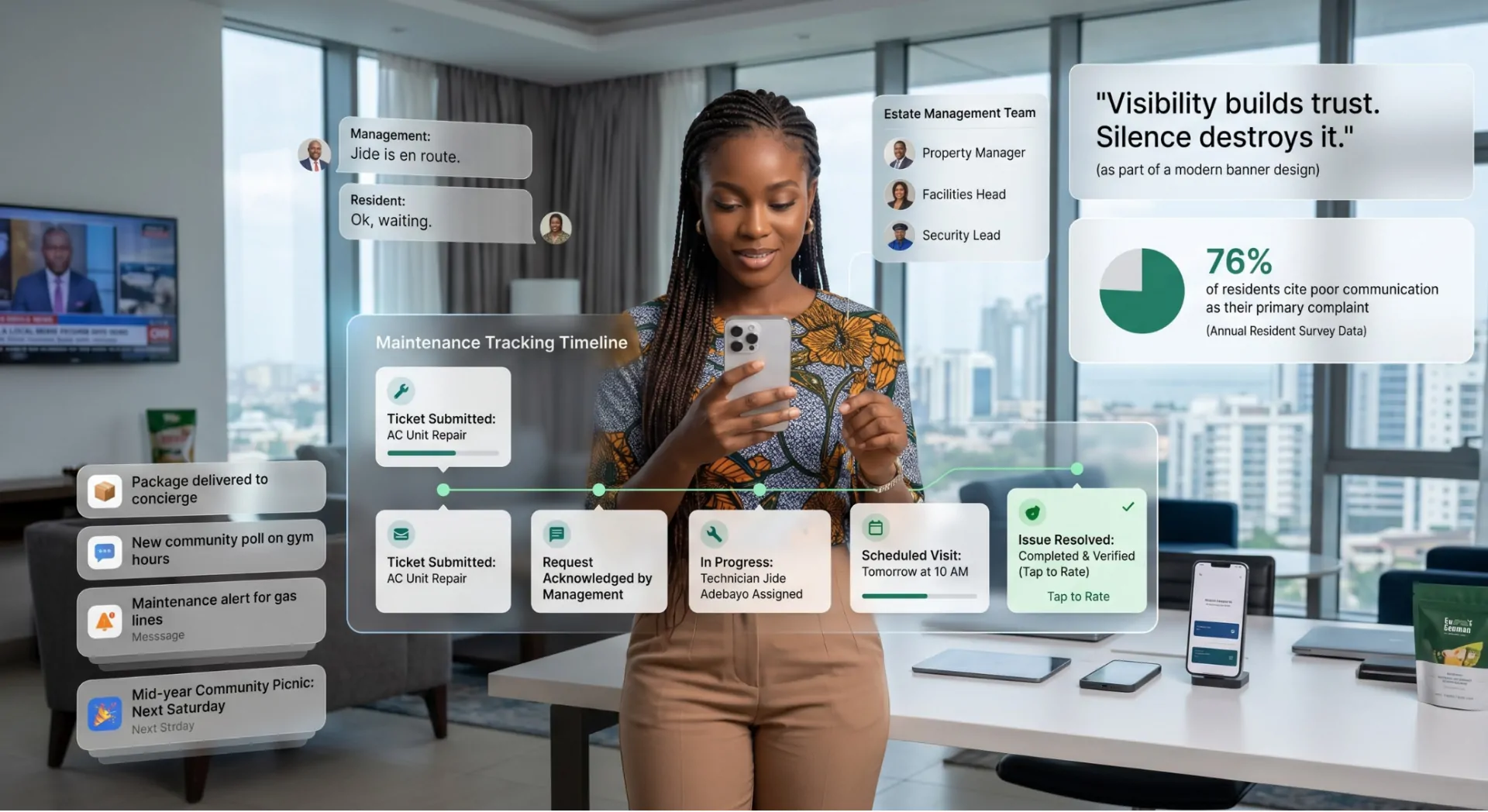
Platforms like Sylogate give African estate managers the infrastructure to do this properly. Residents can log complaints directly from the mobile app with a title, category, severity level, and photos attached. Management receives it immediately through the estate portal, can assign it to a staff member, add timestamped updates as actions are taken, and track status from start to finish. Residents can follow along on their end.
Estates that build real complaint systems have fewer disputes, stronger relationships with residents, and a reputation that makes it easier to attract and keep the kind of residents you actually want living there. Effective resident complaint is not a resource problem and should never be treated as one. It is a systems problem that can be fixed with the right steps, as highlighted in this article.
Tags
Tips and Guides
Updates


SYLOGATE
An Estate Management Software Company.
Simplify complexity and manage multiple residents and visitors from a single platform.