Featured
How to Manage an Effective Estate: A Practical Guide for Nigerian Estate Managers

Praise Ohans
2026/04/20
Managing an estate in Nigeria, or other African countries like Congo, is harder than most people imagine. Queries on how to manage an estate dominate Google search because estate managers are genuinely looking for useful solutions. Estate management is not just about collecting service charges, chasing defaulters, or hiring security guards. Running an estate is similar to running a small government, one that keeps infrastructure working, money flowing, residents peaceful, and property values climbing. The margin for error is very thin, especially given the infrastructure and security gap plaguing the continent.
This guide breaks down exactly what effective estate management looks like in 2026, whether you are managing an estate in Nigeria, Congo, Egypt, or other African countries.
What Effective Estate Management Entails
Many estates believe they are functioning well simply because basic operations are in place. As earlier said, effective estate management goes beyond providing lighting, security, and collecting service charges. To understand what estate management is, you have to look beyond activity and focus on outcomes.
A well-managed estate creates a community where residents feel safe, facilities work reliably, disputes are resolved fairly, and property values grow over time. In contrast, a poorly managed one becomes bombarded with complaints, financial disputes, and declining asset worth. The difference between these two outcomes boils down to structure. The role of an estate manager extends far beyond coordination. The manager is responsible for maintaining systems that keep the estate functional without any hassle. This is the foundation of any serious property management guide.
1. Build a Governance Structure That Works

Every estate that runs smoothly has a clear structure in place. A defined system where everyone knows who is responsible for what, and how decisions are made. Without defined roles and accountability, nothing else functions properly.
Set Up a Functional Estate Management Committee (EMC)
An EMC is a decision-making body with defined responsibilities. At the top sits the committee, responsible for policy direction, major financial decisions, and long-term planning. Below that is the estate manager, who focuses on execution and daily operations. Supporting roles include security chief, maintenance supervisor, and finance officer who handles specific functions like security, maintenance, and finance. This hierarchy ensures that roles are clear. This clarity is the foundation of any solid structure of an estate management team.
Define Decision-Making Rules and Spending Limits
Most estate conflicts involving money have to do with how money is approved and spent. This is why clear thresholds should be put in place. Small operational decisions should not require committee approval, medium-level expenses should follow a structured review, and large expenditures should go through full authorization. To put this in practice, routine decisions under ₦100,000 should rest with the estate manager alone. Decisions between ₦100,000 and ₦500,000 require committee approval. Anything above ₦500,000 needs a formal committee vote.
Hold Annual General Meetings (AGMs) consistently
It is important to hold Annual General Meetings (AGMs) consistently, with proper and clear timelines. This entails giving adequate notice, sharing financial reports ahead of time, and documenting outcomes properly. What estate managers need to realize is that residents do not just want to be informed; they want to feel included, too.
2. Master Estate Financial Management and Service Charge Collection
If there is one aspect of estate management not to ever get wrong, it is this part. Poor financial management is the fastest way to lose resident trust and lose the estate itself. A lot of estates don’t have a finance problem; it is usually a planning problem.
Build a Realistic Annual Budget
Many estate teams are clumsy about how they plan their budgets. They are either copied from previous years or built without sufficient data. A proper estate budget starts before the year begins, at least two months before. It should reflect how the estate operates. Security costs, maintenance cycles, utility expenses, administrative overhead, and reserve funds.
Systemize Service Charge Collection
We are no longer in the times when you chase tenants around for payments. If anything, it shows a lack of a proper system in place. With Sylogate, you replace manual pressure with a proper system. You can issue invoices 30 days in advance, send reminders weeks before due dates, and apply late fees consistently (typically 5–10% per month). After a prolonged period of defaulting, you can restrict access to shared facilities. This is how you improve service charge compliance without constant conflict.
Build and Protect a Reserve Fund
Every estate is bound to face an unexpected expense. It is such an African thing to levy emergency charges on tenants. This is the difference between a well-managed estate and a struggling one. For example, when the estate generator becomes faulty, a well-managed estate already has a reserve fund kept aside to combat situations like this. Estate managers do not have to text residents to contribute to get it fixed. This goes a long way in keeping estate operations running smoothly.
3. Run a Security System Residents Can Trust
Security is a major priority for Nigerian estate residents. You can have perfect budgets and efficient systems, but if residents do not feel safe, none of those matter.
Hire and Train Security Personnel Properly
Mounted gates and cameras are not as important as people. Security starts and ends with people. The quality of your estate security in Nigeria depends heavily on who you hire and how well they are prepared. Hiring is never a casual process and should never be treated as such. Proper background checks, identity verification, and references must be in place. This can be done through agencies or direct recruitment.
Hiring is just a part of the job; training is another. Train guards on access control, emergency protocols, conflict de-escalation, and even customer service. The guard at the gate is often the first impression a visitor gets of your estate.
Layer your access control
A manned gate is just one layer of security and must be backed by CCTV coverage at all entry and exit points, visitor registration logs, and resident ID systems (RFID cards, vehicle stickers, or biometrics for higher-security estates). Invest in perimeter fencing, access control systems, CCTV cameras, and panic alert systems, and conduct regular security audits.
Create a Strict Visitor Management Process
Most security breaches come from access, which is why those who are allowed into the estate premises must follow a very strict process. Every entry must be recorded. Name, purpose, resident being visited, etc. Verification should happen before access is granted.
The visitor management process must never be left to a guard’s discretion; it must always follow a structured process.
4. Use PropTech Tools to Manage Smarter
Nigeria's real estate sector is projected to exceed ₦5 trillion by 2029, which shows that the industry is booming. Thriving in this industry will require structured proptech solutions.
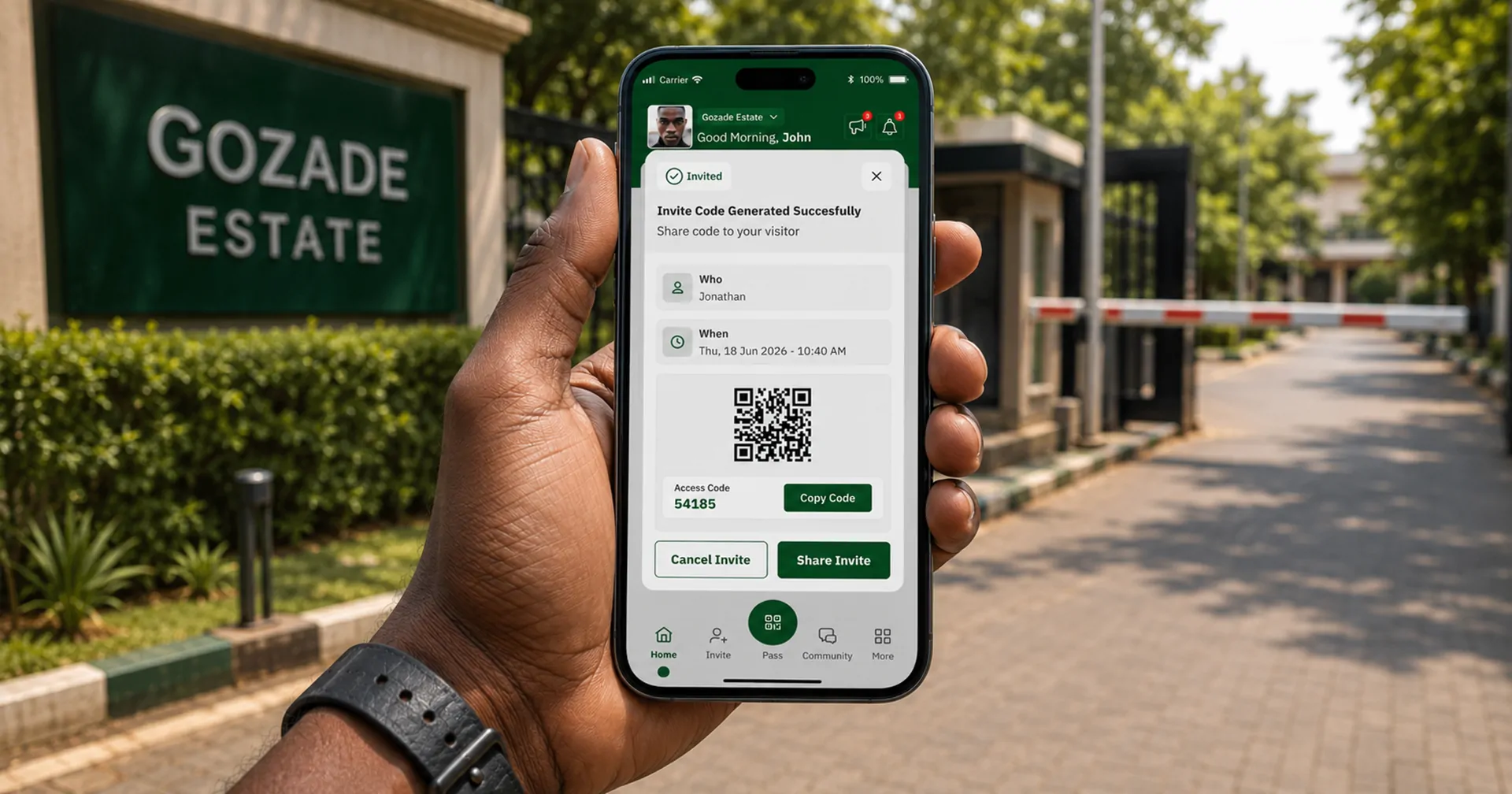
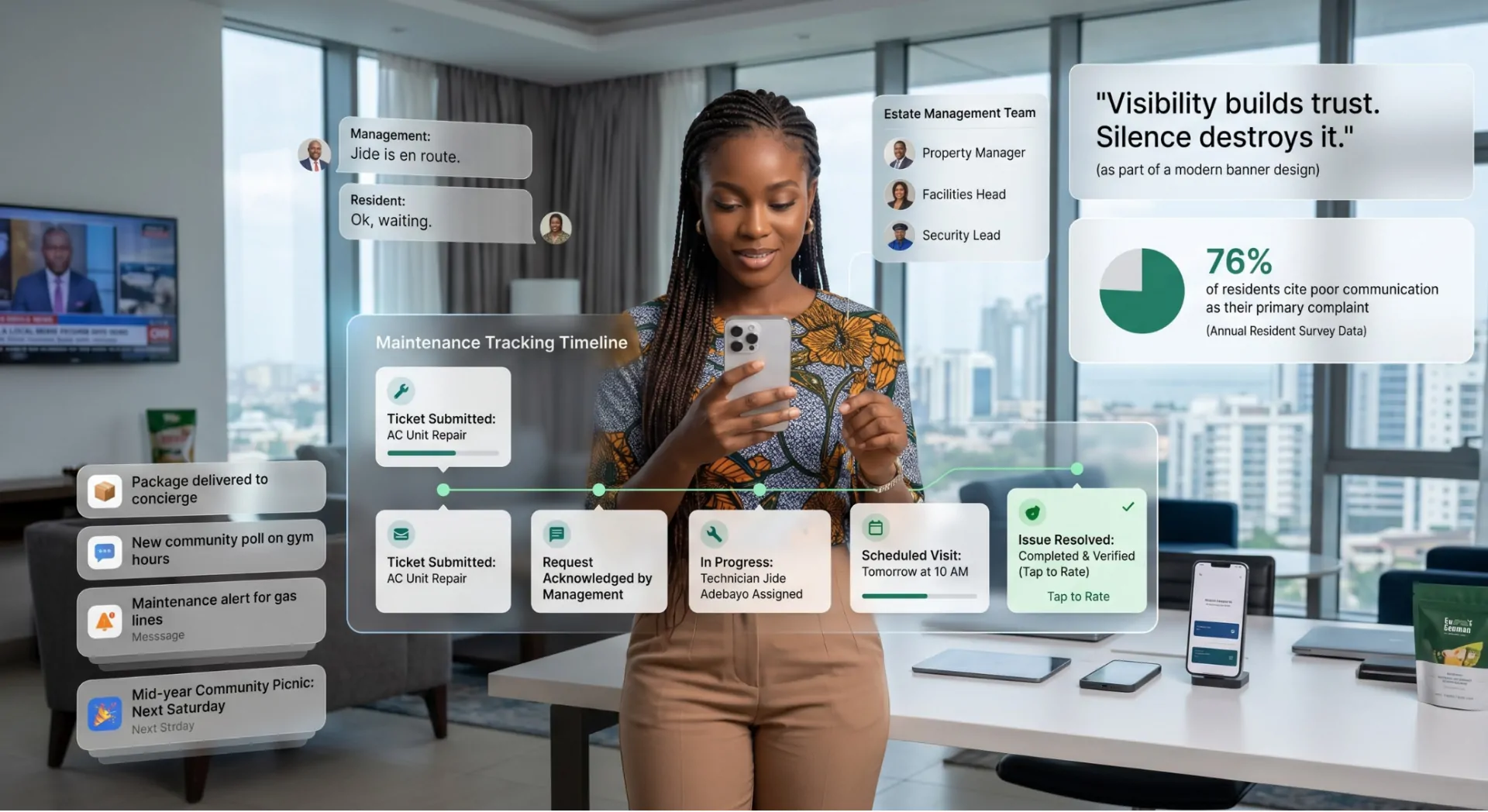
Sylogate is a Nigerian-built platform specifically designed for gated communities. Residents generate digital access codes for guests from their phones. Estate managers set bills, automate collections, track issues, and communicate with residents, all from one mobile app. It also incorporates distinct features like emergency numbers, panic alert button, and an AI-powered assistant – Syla
For property and financial management, platforms like Tenantify and Kayapro360 offer automated invoicing, naira-based payment integrations (Paystack, Flutterwave), lease tracking, maintenance request logging, and financial reporting. These are features that were once only available to large commercial operators.
The reality is that manual processes in estate management is no longer sustainable for estates operating in major African cities.
5. Build a Community
The best-run estates don’t just enforce rules; they are well-connected. A strong sense of community reduces disputes, increases voluntary compliance, and makes residents more likely to pay dues on time and respect shared spaces.
Silence in an estate is rarely a good sign. It usually means one of two things. People are either disengaged or frustrated at not being heard. This is why intentional communication is paramount in every estate. Use estate portals to create resident forums and facilitate communication. Share updates on maintenance projects, financial reports, and security changes proactively. This makes residents feel like a part of the estate operations. This alone goes a long way in fostering togetherness in the estate. Host social events occasionally to further encourage resident interaction.
Running an Estate Effectively
Running an effective estate in 2026 demands professional governance, financial discipline, strong security systems, and smart use of technology. Improving your estate value is directly tied to how well it is run. How well your estate is run is determined largely by your estate manager. They are responsible for systems, outcomes, and long-term value. This guide perfectly encapsulates all they need to keep estate operations running smoothly in 2026 and beyond.
Tags
Tips and Guides
Updates


SYLOGATE
An Estate Management Software Company.
Simplify complexity and manage multiple residents and visitors from a single platform.