Featured
5 Proven Ways Digital Access Control Improves Estate Security in Nigeria

Praise Ohans
2026/01/12
Introduction
Ask any security expert in Nigeria where the highest residential risk lies, and the answer might surprise you: gated estates. This is because these communities are seen as hubs of wealth, hence, they often carry a target that standard neighborhoods don't. This makes estate security in Nigeria non-negotiable. Between May 2023 and April 2024, Nigeria recorded over 51 million crime incidents according to national data. In cities like Lagos and Abuja, gated estates were designed to be the answer. With them, you have controlled entry; guards mounted at the gate, and a general sense of order.
Modern realities have however, caught up. Criminal tactics now outfox the security systems protecting most estates. Manual logbooks can be easily altered, keys can be copied, guards get overwhelmed. And in high density estates with constant tenant movement, access control becomes difficult to manage. This is where modern security systems in Nigeria step in. Digital access control helps eliminate blind spots. It brings structure to who enters, when they enter, and why they are there.
For estate managers and residents asking burning questions like, “How to secure an estate in Nigeria”, “How safe are gated estates in Nigeria?” and "What actually works against modern crime?”. The answer increasingly points in one direction. Smarter access.
1. Eliminate the Weak Link in Estate Security
Every security system has a weak point. In most Nigerian estates, it is not the fence, but the gate process. Physical keys and manual gatekeeping introduce a lot of avoidable risks to estates. Keys may get lost or even get duplicated. Once a key is out there, control is gone. You cannot track, revoke, or limit its use until the locks are changed. This is why more estates are choosing to replace keys with access control systems that are digital and centralized.
Then there is the human factor. Estate gate security in Nigeria often depends on guards working long shifts, managing queues, answering questions, and making decisions under pressure. When fatigue sets in, visitor verification is then based mostly on familiarity and assumptions.
With digital access control systems, the entry and exit process is more stringent. Residents can use mobile apps, access codes, or biometric features to enter the estate. When a tenant moves out, access is revoked instantly. No need for key collection or lock replacement. When people search for alternatives to estate keys, this is what they are really asking for. According to research on Lagos gated communities, residents report reduced fear of crime in estates with modern security measures. A system that does not rely fully on human discretion to stay secure.
2. Use Smart Visitor Management Systems to Control Estate Access
One of the greatest challenges for estate security is managing visitor access. Familiarity often leads to a dangerous lapse in protocol, with guards frequently allowing residents or recurring guests to pass without codes simply because they recognize them. However, recognition does not always mean authorization. Without a formal system in place, it is nearly impossible for a guard to know if a familiar visitor is actually welcomed by the tenant on any given day.
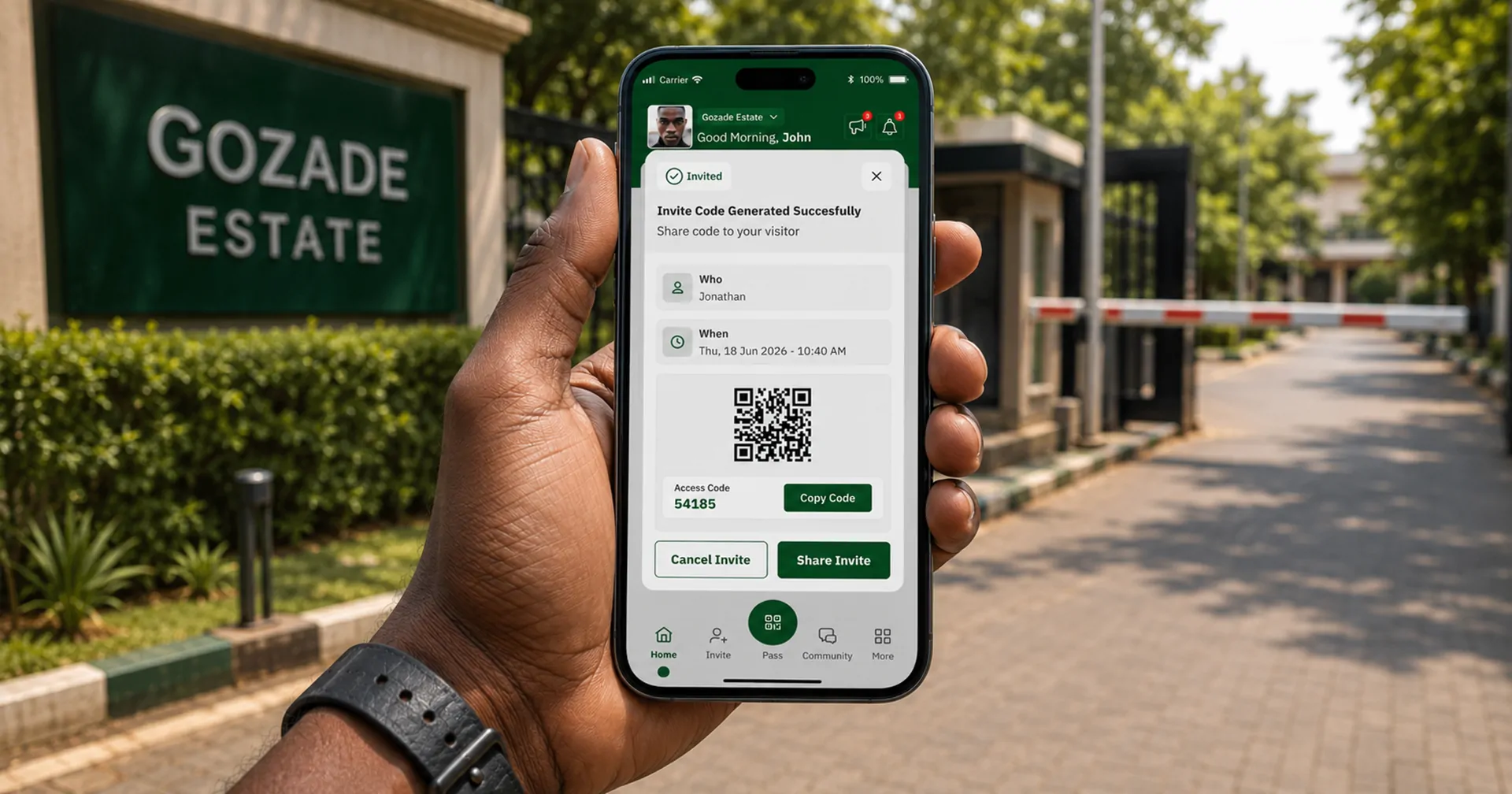
With smart estate gate management, residents pre-register visitors before they arrive. The system generates temporary access codes that only work within a defined time window. Visitor details are logged digitally, often with photos, timestamps, and access points used. This creates a digital visitor log in Nigeria that cannot be manipulated.
Estate visitor access control also improves resident experience. It eliminates long queues often associated with manually run estates, especially during peak traffic periods like Christmas. It also eliminates the need for calls from the gate. Visitors move faster, and security becomes less stressful but stronger. In an emergency, these systems become even more powerful. Estate managers can instantly see who is inside the estate and where access was granted. This instant visibility is impossible with paper records. When people search “how to control visitors in estates” or “best visitor management app in Nigeria,” this is the outcome they are looking for.
3. Stop Identity Fraud with Biometric Access Control in Estates
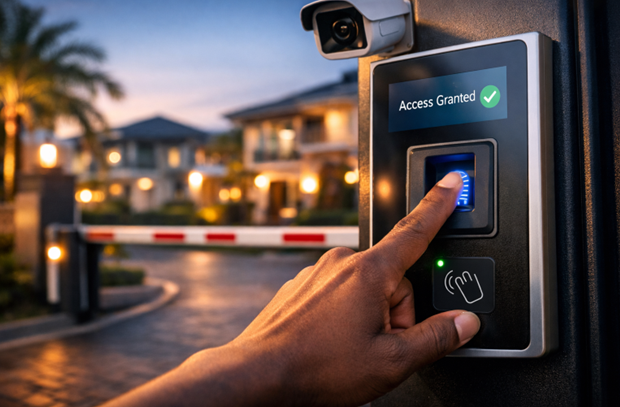
In estate security, identity is everything. Hence, why estates map the identity of every tenant using ID cards, codes, tags etc. However, these tags can be borrowed, cloned, or shared. This is really concerning, especially given that we live in a world where impersonation and access abuse are real risks, and relying on these methods leaves too much room for error.
This is why biometric access control in Nigeria is becoming a standard choice among many gated estates in Lagos and other major cities in Nigeria. Biometric systems tie access to physical identity. Fingerprint access systems are now common in residential estates because they are fast, accurate, and difficult to bypass. Authentication happens in seconds, without queues or manual verification.
Facial recognition takes this even further. Facial recognition works especially well at main gates and high-traffic areas where speed matters. The system verifies identity without contact, saving valuable time, and maintaining control. Biometrics also allow estates to secure restricted zones more effectively. Parking areas, power facilities, gyms, and other private access points no longer rely on shared keys or generic cards. Only authorized residents or staff can enter, and every access attempt is logged automatically.
4. Monitor Estate Access in Real Time with Integrated Security Systems
We have established how powerful access control is. But its real strength shows up when it becomes part of a bigger system. Modern estates are moving toward integrated security systems in Nigeria where access control, CCTV, alarms, and monitoring platforms work together as one.
With access control and CCTV integration, every entry attempt can automatically trigger a camera recording. The system logs who accessed the gate, at what time, and captures visual confirmation at the same time. This creates a much more reliable record that cannot be disputed.
Real-time estate security monitoring helps in better estate management as security teams can easily oversee multiple entry points from a single smart security dashboard. Whether on site or off site, authorized personnel can view access events and alerts instantly. Remote monitoring is especially important for large estates and multi-gate communities. There is no need for estate managers to be physically present to maintain control. They can monitor gate activity, review logs, and respond to issues from anywhere. This is how to monitor estate gates remotely.
5. Improve Estate Security While Reducing Long-Term Security Costs
One of the reasons why manually run estates haven’t embraced digital access control yet is that they believe in the myth that it is expensive to implement. No matter how expensive you think it is, insecurity costs more. When estate managers calculate the cost of estate security in Nigeria, they often focus on visible expenses, while ignoring the hidden costs like theft incidents, property damage, resident dissatisfaction etc. Digital access control reduces these costs to the barest minimum.
With automated gate systems, estates experience reduced staffing needs. This does not mean removing guards; it means allowing fewer guards to do better work. Instead of manually checking visitors and logging entries, security personnel can focus on patrol, monitoring, and response. Fewer manual processes also mean fewer breaches. Many security incidents start with simple access mistakes like a waved-through visitor. Digital systems eliminate these gaps by enforcing rules automatically.
Better data leads to better resource allocation. Access logs show peak traffic times, commonly accessed areas, and unusual patterns. Estate managers can adjust staffing schedules, improve lighting in vulnerable zones, and strengthen weak points based on informed data. This is why more estates now view access control as a smart security investment in Nigeria.
Conclusion
Switching to digital access control does not necessarily mean rebuilding an estate from scratch. Most Nigerian estates can retrofit existing gates, and upgrade security without the need to disrupt daily operations. Modern estate management systems in Nigeria also combine access control with visitor management and monitoring tools, reducing manual processes and making security easier to manage. Estates can start small, scale gradually, and improve control without heavy upfront investment. The impact of this switch is immediate. Residents immediately feel safer; traffic at the gate reduces, and trust in estate management improves. This is why digital access control is replacing manual gatekeeping in Nigeria. Over time, safer estates in Nigeria attract better tenants and maintain stronger property values. The future of estate security in Nigeria is digital, integrated, and data driven, and manual systems will not scale against modern threats.
Tags
Tips and Guides
Updates


SYLOGATE
An Estate Management Software Company.
Simplify complexity and manage multiple residents and visitors from a single platform.