Featured
Hosting Guests This Christmas? Here's How to Manage Visitor Access Without Compromising Security

Praise Ohans
2025/12/22
Introduction
Every December is a busy one in Nigerian estates. This is a time where you see lots of cars packed at the gate, and people trooping in for Christmas lunches, family reunions, and house parties. It is very easy to get carried away with the avalanche of festivities in the month and lose track of security. Little wonder why statistics reveal that burglaries surge during the holiday season.
Running an estate traditionally during this period can be a hellish experience. Managing gate logs manually and needing human confirmation as your primary line of defense can be overwhelming. While this may be just enough to survive other months, the holiday season completely breaks the system. The problem arises from modern being larger, denser, and far more active than they were even a few years ago. Urban growth and gated developments have increased traffic while expectations around safety and convenience have risen sharply.
Christmas exposes what already exists. Manual systems were never built for peak movement or real-time tracking. That pressure is why digital estate management is quickly becoming the standard for how Nigerian estates are run.
The Security and Convenience Demand
Manual estate operations cannot keep up with the traffic the festive season brings. Security teams either have to slow everything down to verify every visitor or relax checks to keep queues moving. To be fair, neither option makes any sense. Long lines at gates may frustrate residents and guests. When guards face pressure to speed things up, verification becomes inconsistent, leading to weaker security.
Residents are also not left out in the dissatisfaction. Everyone wants their guests to enter smoothly without repeated calls or delays. At the same time, they expect the estate to know exactly who is on the premises. Manual gatekeeping struggles to deliver both at once because it relies entirely on human coordination at the point of entry.
Digital systems handle this issue with a great level of control. Access is approved before arrival and visitor details recorded automatically. Security teams are left to focus on monitoring instead of improvising. In modern Nigerian estates, especially during high-traffic seasons, separating security from convenience is no longer realistic. The two must work together, or neither works well.
Digital Visitor Management Era
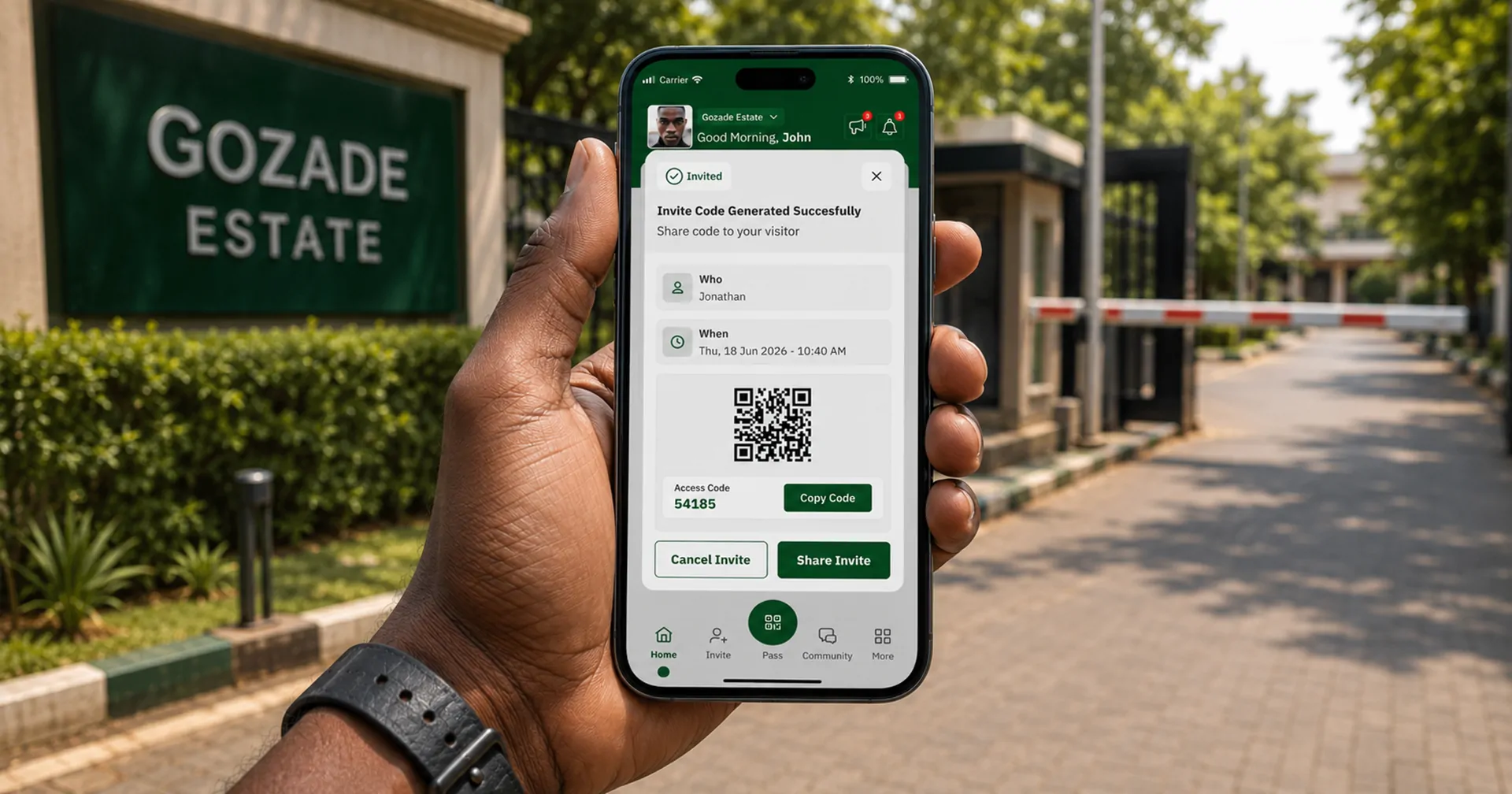
Digital visitor management has transformed how estate security is handled. Instead of dealing with guests only when they arrive at the gate, access is handled ahead of time. Residents generate an access code for their visitors through an app or platform, submitting names, visit dates, and duration. Approval happens before the visit, not under pressure at the gate.
Once approved, visitors receive temporary digital credentials, often in the form of numerical codes or QR codes. These codes are time-bound and purpose-specific, meaning access expires automatically after the visit. Entry is quick and traceable.
For estate managers, they get detailed reports of movements within the estate. Digital dashboards show who is expected, who has arrived, and how many visitors are currently on the premises. Logs are created automatically, completely eliminating the need for handwritten records. During peak periods like holidays, this real-time oversight is key to maintaining order.
The effect on operations is paramount. Fewer queues at the gate means there is smoother flow at entry points. There are also clear records that protect both residents and management. Digital visitor management improves security massively while changing how estates function day to day.
Smart Access Control Is Replacing Physical Gatekeeping
As visitor management goes digital, gate operations follow suit. Physical gatekeeping, where access depends entirely on guards and manual verification, is being replaced by smart access control systems.
Cloud-based entry systems allow residents to approve access remotely using their phones. Guests no longer need to wait while security tries to reach someone. Entry decisions happen in real time, without requiring residents to be physically present or distracted by constant calls. These systems support multiple access methods suited to Nigerian estates. QR codes can be used for guests, PINs for service providers, and biometric options where infrastructure allows. This makes adoption practical across different estate sizes and budgets.
Local proptech companies are playing a key role in modernizing the estate experience. They make global access control technology available to match local realities such as power reliability, internet availability, and security expectations. The combination of smart gates, notifications, and real-time monitoring into one unified platform make digital access control usable at scale.
Why This Shift Is Becoming the New Standard
Digital estate management is becoming the standard because it consistently delivers better outcomes over every problem estates face today.
Security improves massively because access is no longer based on memory. Every entry is approved, and traceable. This reduces unauthorized access and creates accountability that manual systems lack, especially during high-traffic periods.
Administrative work also drops massively. Estate managers spend less time resolving disputes, or responding to access complaints. Logs are generated automatically, and reports exportable. Oversight becomes more structured, freeing management to focus on operations.
Residents are also not left out of the perks. Approval of guests happens on their terms, completely eliminating unwanted visitations. Also, sophisticated access structures allow invited visitors to gain entry into the estate much more smoothly. There are fewer interruptions and fewer frustrations. Security oversees gate operations digitally, which is exactly how residents expect modern systems to behave.
Most importantly, digital systems scale. As estates grow in size and activity, the same tools continue to work with no complexity or added manpower. This ability to scale effortlessly is why digital estate management is now a standard for modern estate living.
Conclusion
Adoption is accelerating in Nigeria because estates are facing real, everyday pressures. Issues like population growth, urban density, and heightened security awareness are forcing management models to evolve. Digital tools are now being adopted because they solve problems manual systems can no longer handle.
Estates that remain fully manual face growing risks like congestion at gates, poor visibility into who is on the premises, higher dependence on human judgment when under pressure. Over time, these weaknesses affect security, resident satisfaction, and even property value.
The future of property management in Nigeria is digital-first. Estates are now being judged not just by location or design, but by how well they manage access, security, and resident experience. This has made digital estate management the new standard for modern living.
Tags
Tips and Guides
Updates


SYLOGATE
An Estate Management Software Company.
Simplify complexity and manage multiple residents and visitors from a single platform.